Enterprise-E · the bridge
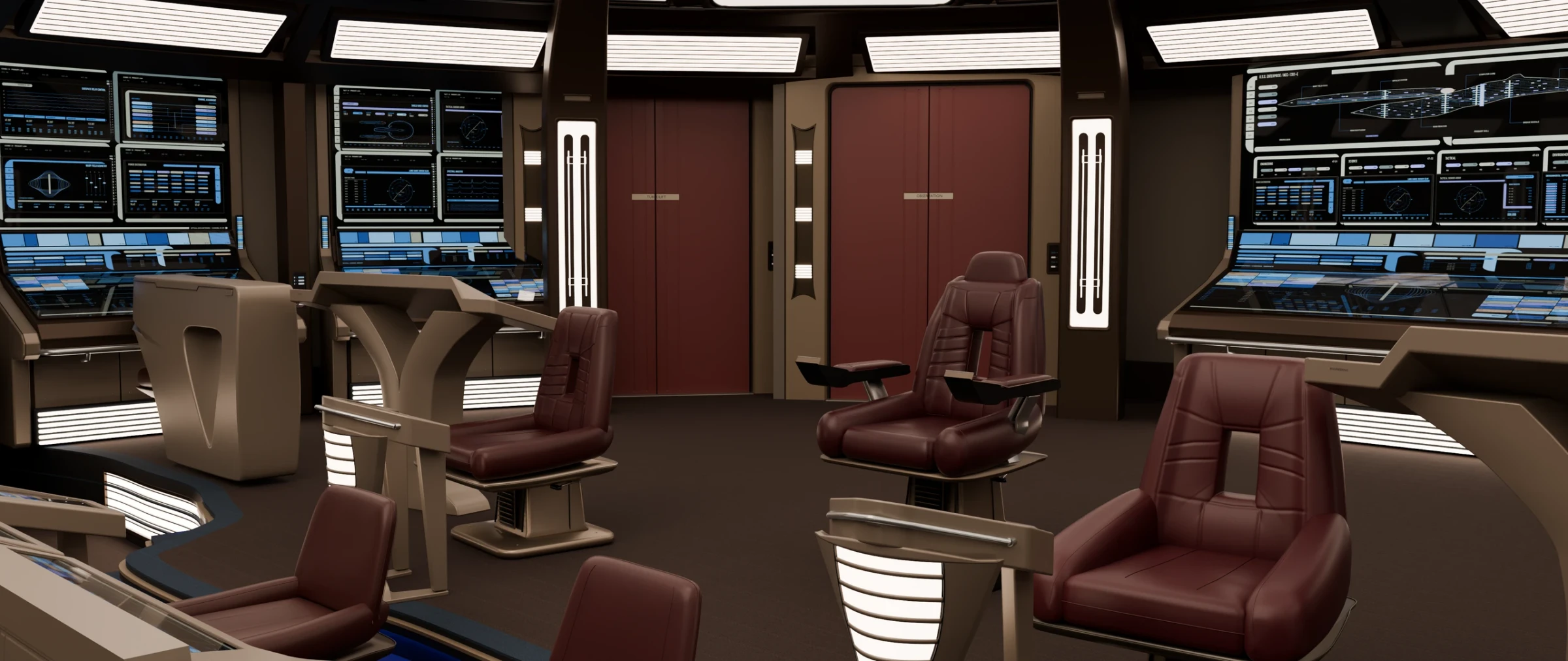
A room built to be looked at closely. Architecture, consoles and command chairs reconstructed in Blender from set drawings, photographs and surviving props.
- Scene
- Editable Blender geometry, materials, lighting and cameras
- Reference
- Nemesis set drawings, production photographs and auction measurements
- Model
- Reference-based reconstruction, with photo-derived dimensions where drawings are incomplete
- Stack
- Blender · Cycles · Python
A room with a structure
The bridge begins with its stepped deck and curved structural frame. The floor, architecture, ceiling, stations, consoles, seats and doors remain separate assemblies. That makes the construction editable: a console is more than a silhouette, and a chair is more than a prop dropped into the camera’s view.
The scene uses metres. The set drawing’s 18-inch platform datum and 18-foot structural radius anchor the room. Surviving prop dimensions provide checks on the chairs and consoles. Unmeasured backs, hidden surfaces and some placements are interpretations from photographs.
The command chair
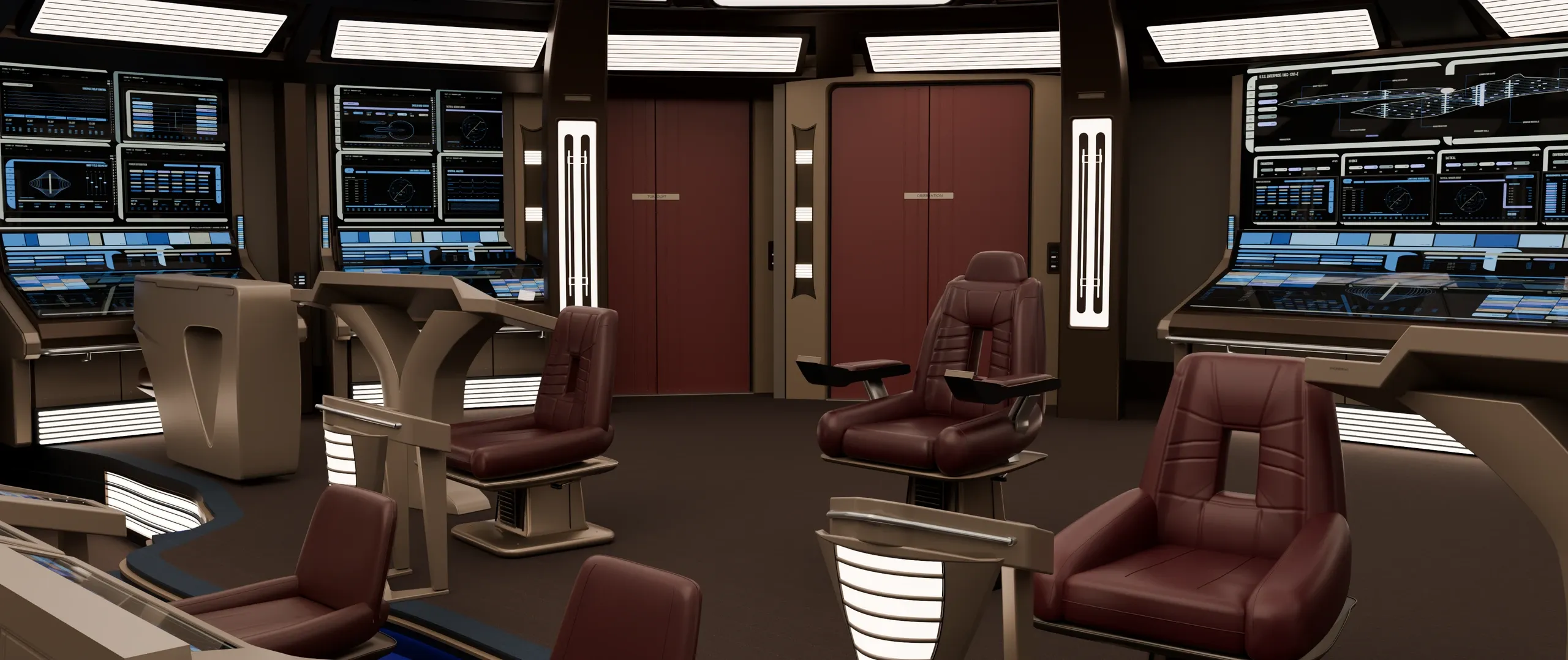
The central chair has a shaped back shell with an opening, individual upholstered panels, folded seat edges, seams and arm controls. The foot and pedestal are built separately. The two accompanying seats and the lower workstation chairs have their own forms.
Light belongs to the set
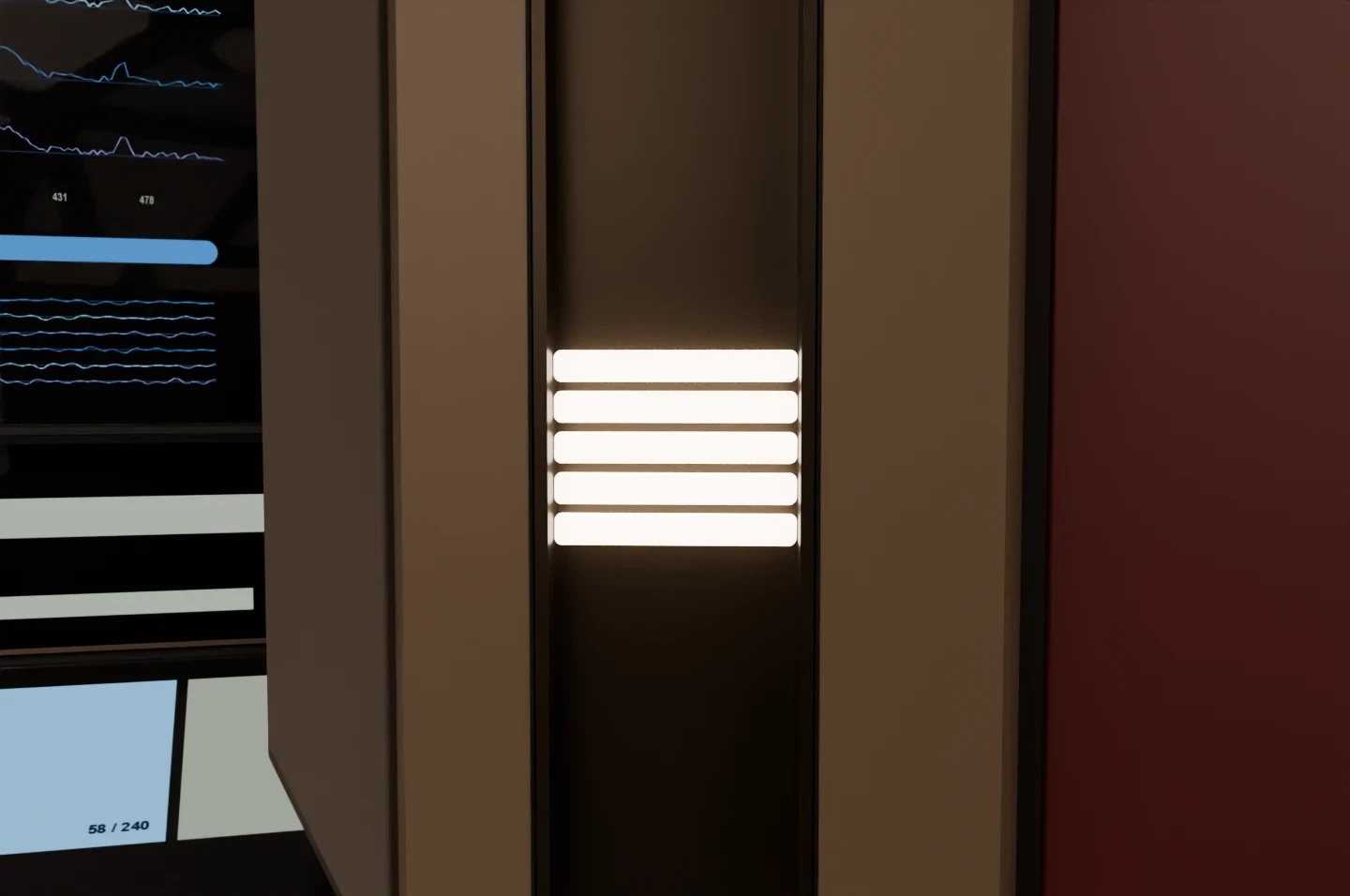
The practical lights sit inside housings: recessed ceiling fittings, louvres, opal strips and sealed channels. The wall stations have separate monitors and surrounding hardware. Small physical recesses keep the luminous graphics from looking pasted onto the room.
Reference and interpretation
This is a fan reconstruction of the bridge from Star Trek: Nemesis, not a scan of the original set. The LCARS graphics are recreations; spaces behind the closed doors are not built. The saved project includes the source drawings, reference index and camera views used to check the work.
The Enterprise-E exterior study explores the same world through lighting and camera work. The Nostromo corridor takes a different approach: industrial repetition and a much narrower pool of light.