Overview
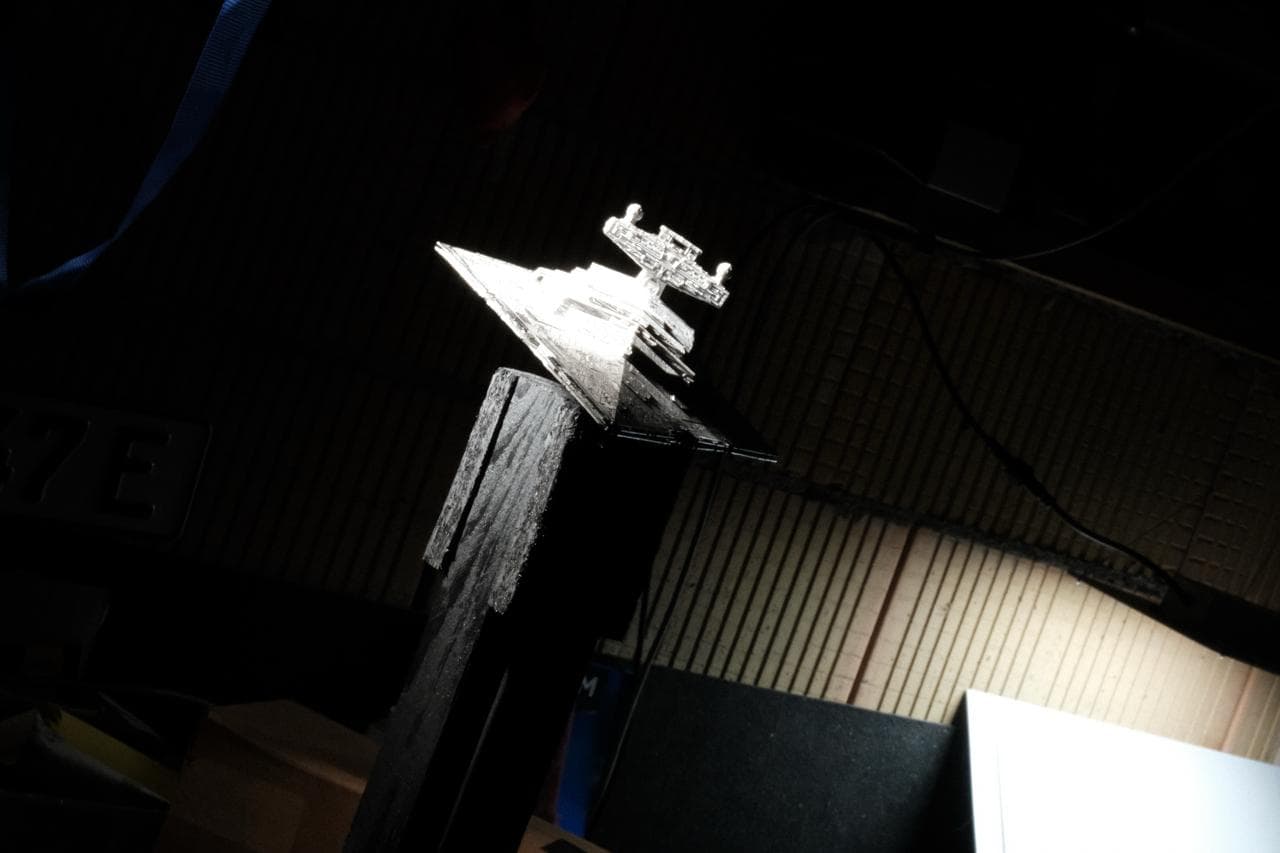
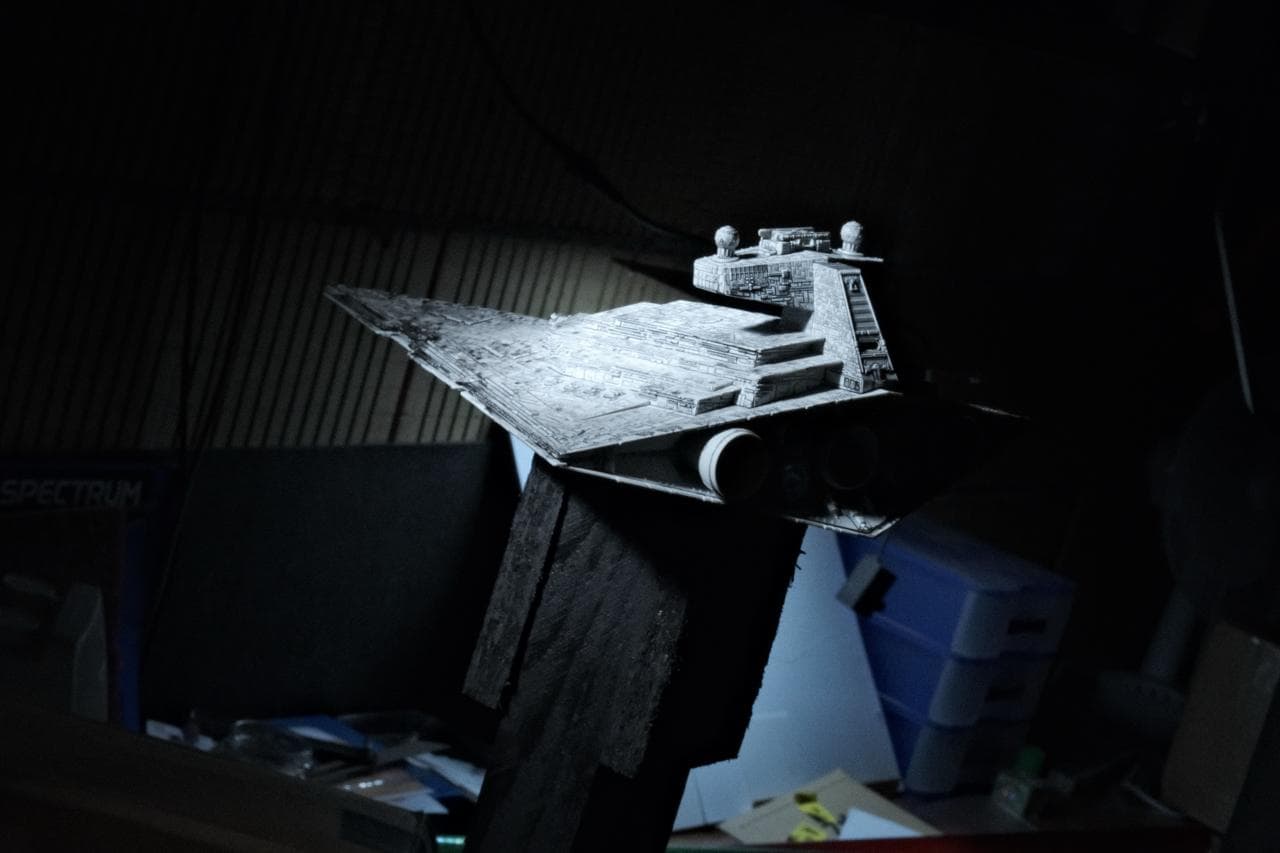
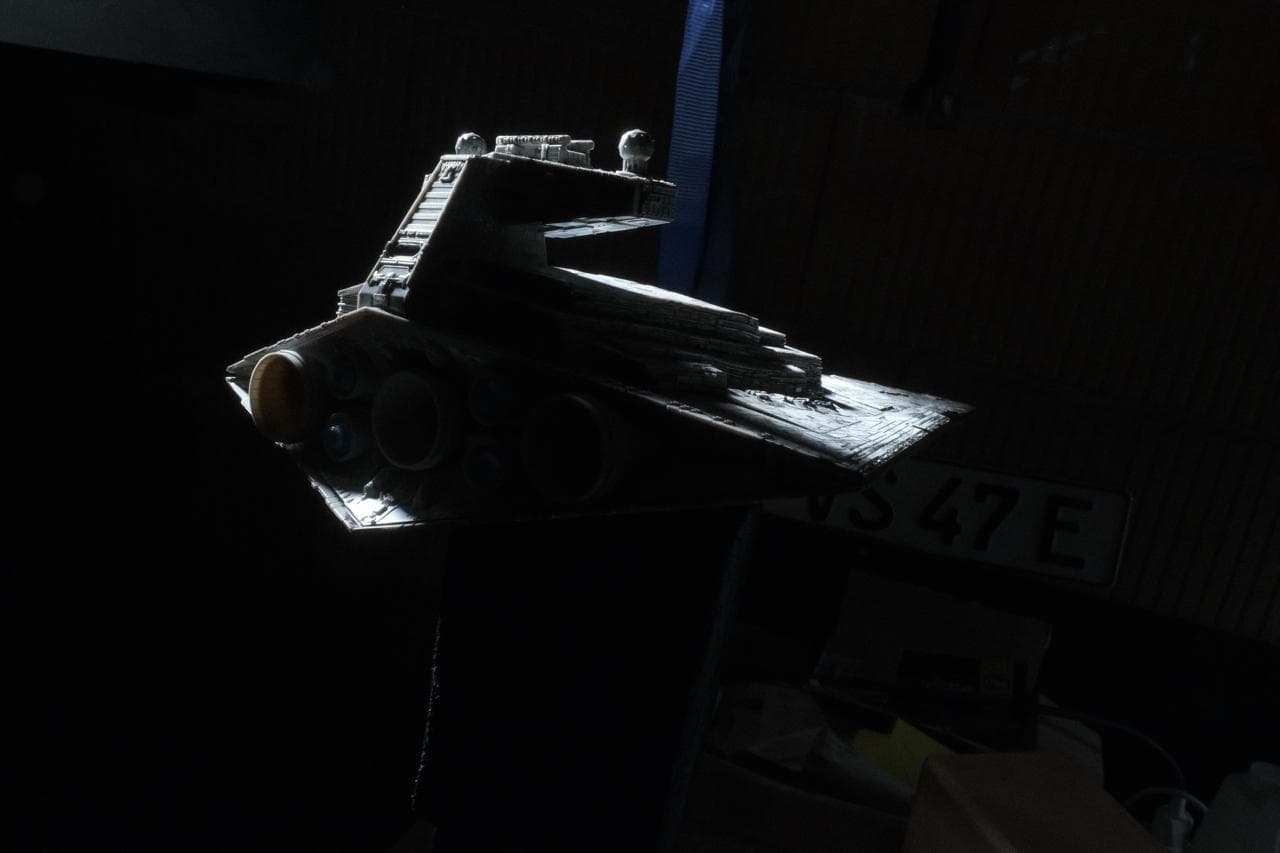
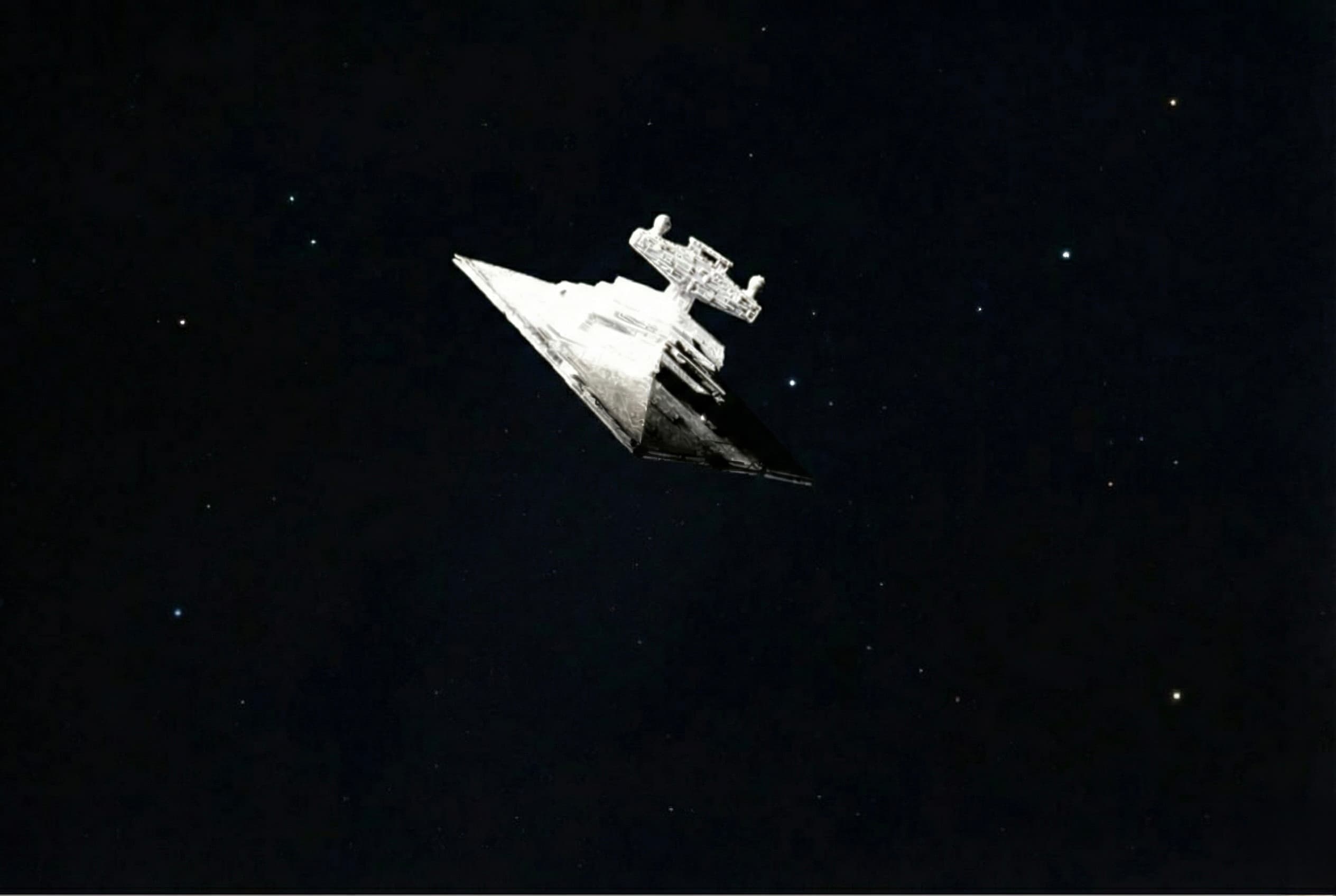
This study answers a simple question: can a miniature starship feel cinematic and heavy on camera before the digital polish starts? The model is treated like a small set, with the look coming from controlled key light, negative fill, edge separation, and repeatable practical passes.
Build / Process
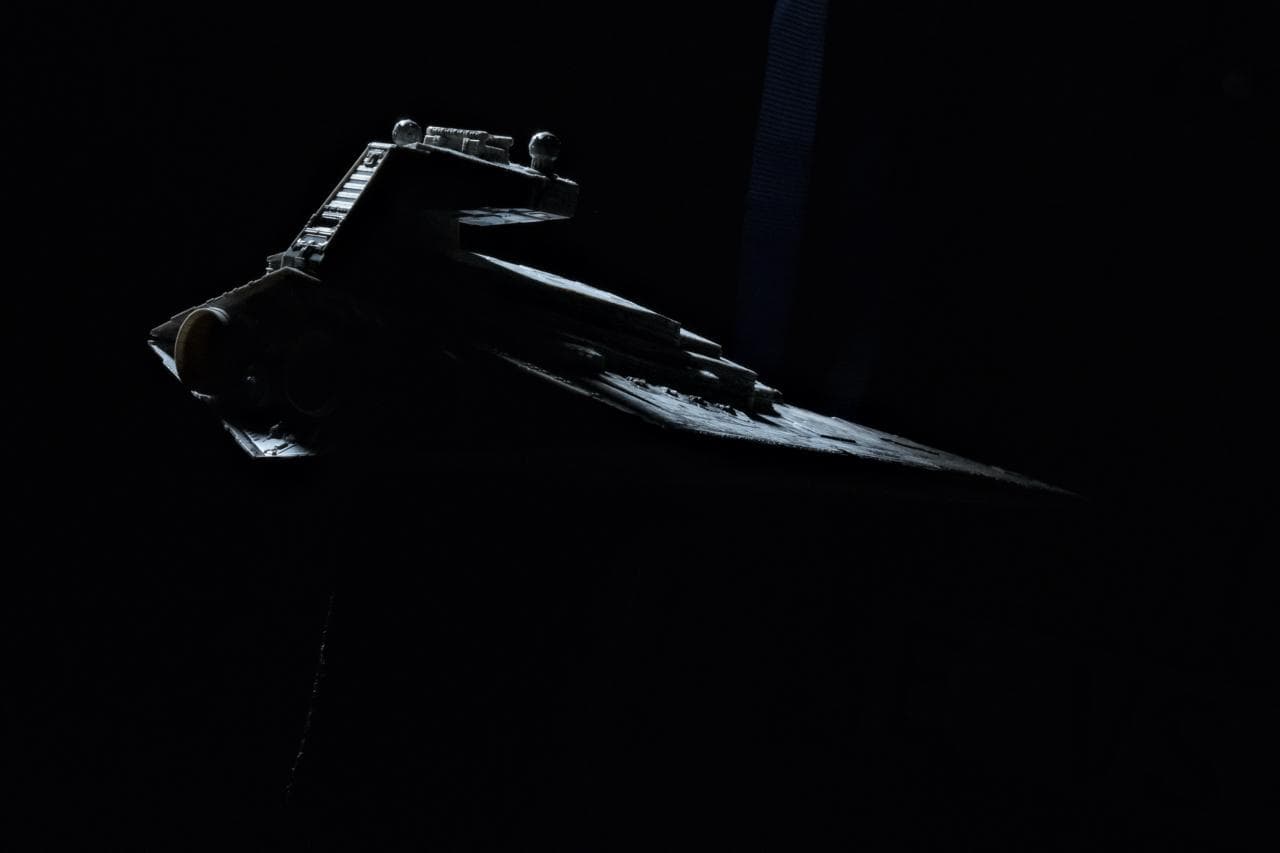
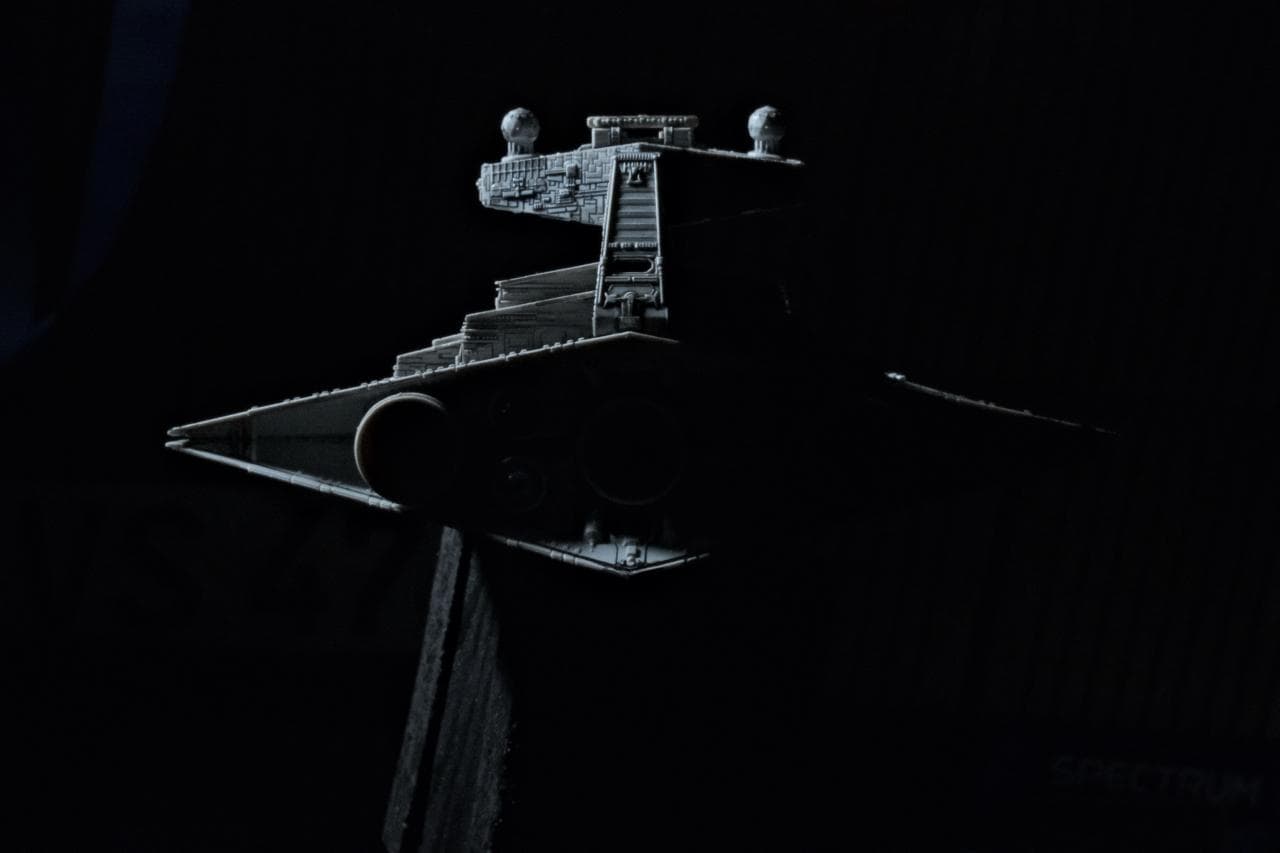
The pass structure is built around shape readability. A key-light pass gives the hull volume, a rim pass separates the silhouette, and a darker side pass checks whether the ship still reads when most of the model falls away. Fixture distance, flag placement, lens height, and small angle changes are logged so the look can be reproduced later.
What Changed
The strongest improvement came from reducing general fill. Earlier frames were clear, but too lightweight. Once more of the hull was allowed to disappear and the rim light became selective, the ship started to feel like an object with mass instead of a model being displayed.
Next
The next step is controlled camera movement and engine-glow testing. If the practical lighting holds during motion, this setup becomes a reliable base for wider KORETH-style space shots instead of a one-off still.